It is a truth universally acknowledged that all second graders try to write a book, right?
2011
It was 2011, the perfect year as to start a book.
I started writing in a red, faux leather notebook given to me by my great-grandmother. I had been saving it for a special occasion, and apparently, this was it.
The story turned out to be a whooping 27-pages and my pride and joy for about a month. I took it into class, made my teacher play editor, and took her notes on the chin, working on the story well past my bedtime and without my parents’ knowledge.
(Really, when thinking about it, my mother should’ve been proud. I was learning grammar under my pink flower comforter, careful to not wake my little sister. There are many less productive things I could’ve been doing.)
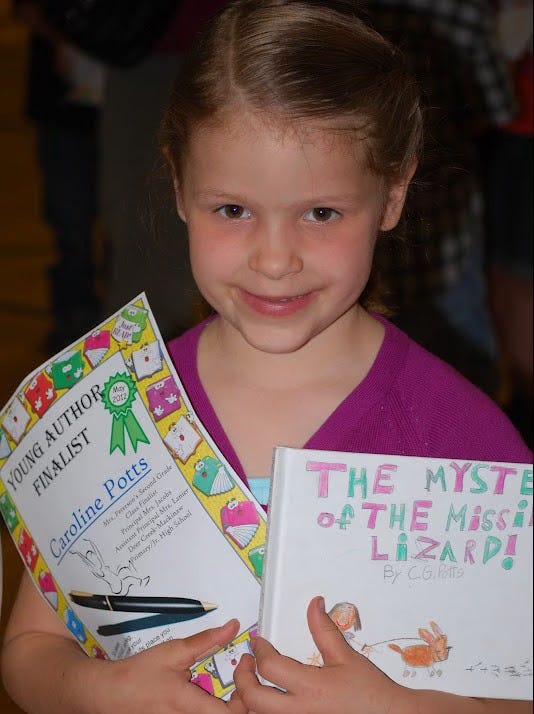
I went on to win 3rd place for writing in my school’s Young Authors competition, growing my confidence and love for writing. I remember feeling like I had found something: something I was good at, something that was fun, something that made time speed up and my little-kid brain slow down.
2013
It was 2013, and like many fourth graders, mathematics was kicking my little butt. I was miserably shuffling my way through timed multiplication tables.
I just couldn’t get math, especially not as quickly as the timer on the SmartBoard wanted me to. The seconds clicked down, but 6 x 7 (hehe) refused to create a new, bigger number in my brain, no matter how hard I tried.
It didn’t make any sense. Who created all these rules in math? And why?
When I was denied at the door from the multiplication pizza party that all my smart friends got to go to, I went home. To distract myself from my fomo, I set on finding the faux-leather notebook and reading through my writing to cheer myself up.
I tore my house apart when I got home, looking for it as my friends celebrated their smart, math-loving brains with a slice of Casey’s pizza.
Nerds.
I pulled books from my bedroom bookshelf, and I couldn’t find it.
I pulled every stuffed animal, toy tractor, and American Girl Doll accessory from the play room baskets, and I couldn’t find it.
I looked under every piece of furniture, and I couldn’t find it.
I distinctly remember slumping down against the wall of our exercise room, wanting to cry. The cold bricks dug into my back, as painful and unsettling as the thought that I had lost my life’s work forever.
What was I going to do?
(Spoiler alert, I have it now. It was never thrown away. Breakdown for naught.)
As I stood up, leaving the brick wall behind me, I decided to rewrite it, trying to tell myself that I could easily remember such an important work of fiction.
I grabbed an adult-looking composition notebook from the office desk drawers and started all over again, adding in more details as I wrote.
2015
It was 2015, and there were three things I prided myself in while in fifth grade:
- I was left-handed.
- I was the oldest sibling.
- I wrote a book for fun.
Over the next couple of years of intermediate school, I filled pages, addicted to the feeling of turning a completed notebook page just to start over again. I turned the side of my left hand black with pencil every day, picking up the old habit of staying up well past my bedtime to work on a masterpiece.
I filled notebook after notebook, sneaking them into my grade school classrooms and writing the story when I should’ve been taking notes. And whenever the tests were hard or the math didn’t add up, I would quietly think: “Well, at least I’m the soon-to-be bestselling, famous author!”
The plan was simple: become a left-handed writer destined to write great books and earn barrels of money, which I would use to go to Disney World whenever I wanted.
2017
I had learned from past mistakes and made sure to pack my notebooks very carefully when moving to our new house in our new town.
My first novel of a thrilling trilogy was drafted out and completed, and it felt like my entire future career was packaged into one cardboard box.
I started eighth grade at my new school and was miserable, and so I spent passing periods writing in a little black notebook.
At an after-school extracurricular, I showed three of my “friends” my current notebook, filled to the brim with notes, character names, hand-drawn maps, and chapter drafts. My pride and joy.
One of the girls grabbed the black notebook, crumpling my current page in her sweaty palm before flipping through what I had written. A small smile sat on her face, but it didn’t look real, like someone had drawn it on instead of being real and genuine.
“This is so silly!” she said.
“Silly?”
“Yeah, like what a fun little silly hobby!”
Hobby?
“I wrote a story once when I was in grade school,” one of her minions said.
I nodded. “Me too.”
This story. That you’re holding and crinkling the words. And smiling at, but not in a good way.
The crowded, smelly, loud classroom went silent to me. For writing and words suddenly felt like multiplication. It felt embarrassing, hot, heavy, and silly.
I didn’t take my notebook to school with me for the rest of the school year.
2022
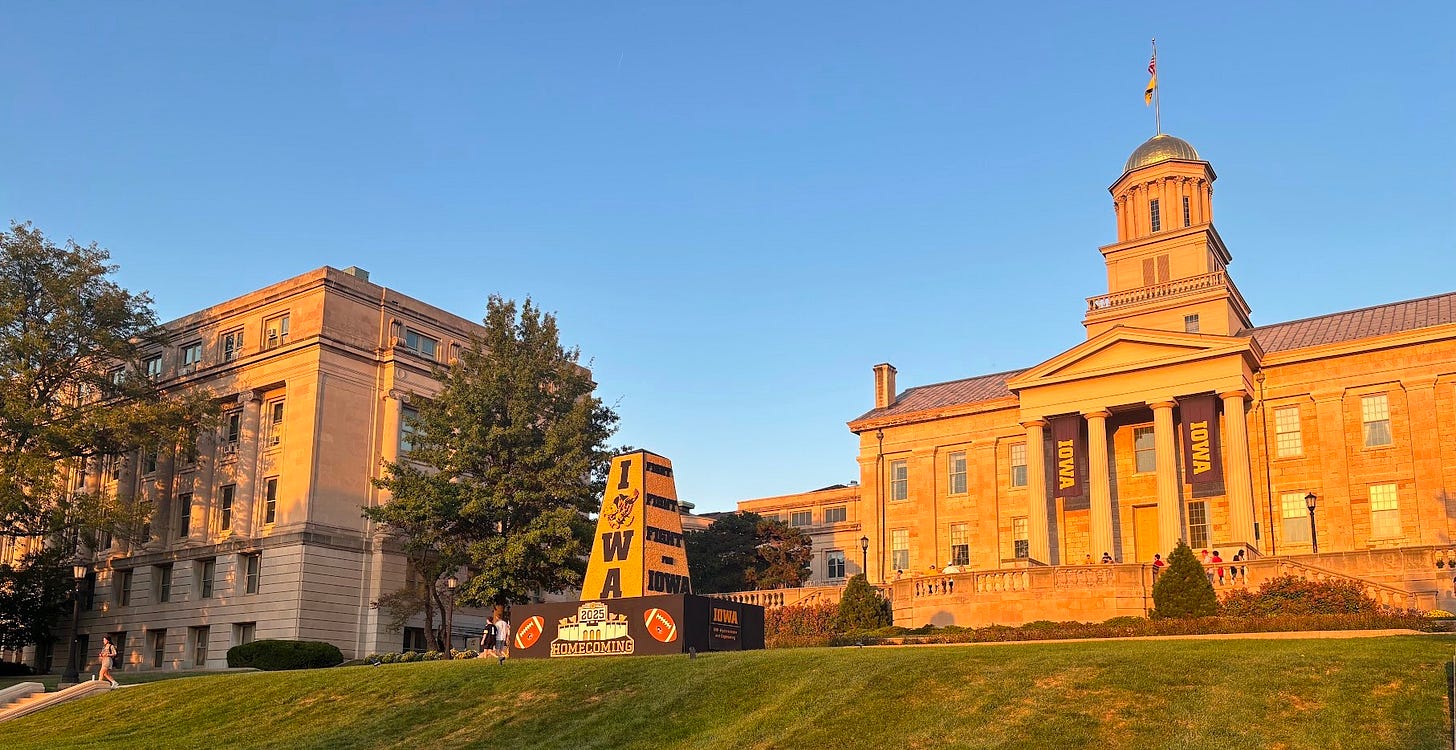
It was 2022, and I was called into my professor’s office.
“Hi, Jamie.”
“Caroline! Come sit. Leave the door open, though, if you will.”
My professor’s office was small and located in the worst smelling and looking building in all of Iowa. But it looked out at the Pentacrest, one of the prettiest parts of campus.
She quickly opened a file cabinet drawer, and it banged against the desk leg, sending a sharp ring through the air. Humming to herself as she filtered through pages upon pages, stopping the tune only when she found my name, pulling it from the stack.
“Caroline, this is really good.”
She held it out for me to see, and I looked down upon notebook paper, expecting to see my last academic essay.
But there was my loopy, messy handwriting, sprawled out onto the page, so un-academic looking. She had pulled out an in-class activity from the day before, something we had written after reading Never Let Me Go by Kazuo Ishiguro.
“Thank you,” I said.
“You’re a first year, right?”
“Yeah… y-yes.”
“What’s your major?”
“Business.”
A beat.
“Right. Have you ever considered an English major? Iowa is the writing school.”
I shrugged. “I don’t know.”
She nodded, pursing her lips.
“It looks good for any kind of business career, but you should consider creative writing. Something that works on that.” She nodded toward the activity sitting between us.
“Are there minors?” I asked.
“Yes. And certificates. And majors.”
“Oh.”
“Just think about it.”
So I did.
2026
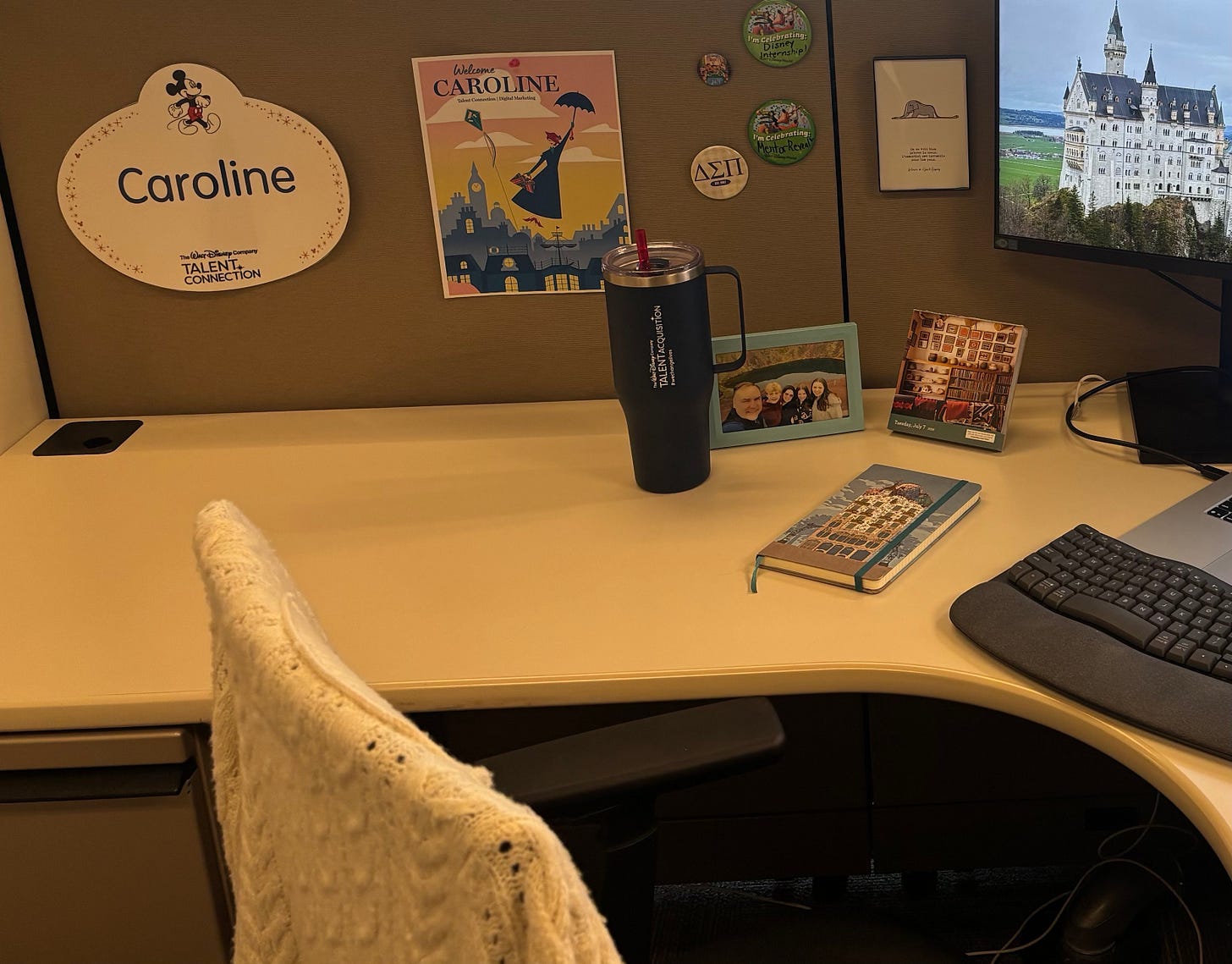
It is 2026, and I’m almost late for work, scrambling around my kitchen like a lunatic.
I’m almost late for work, scrambling around my kitchen like a lunatic.
Traffic. I’m sure there’s traffic.
Lipstick. Why are my lips so dry?
Lunch. I need to eat a damn salad today!
MacBook. Did I charge it last night?
God, this bag is heavy.
Shit, shit, shit!
I run back to my room, kitten heels clopping against the floor.
I grab the Moleskine notebook from my nightstand.
The side of my left hand is still stained black from the night before.
And for a second, I am seven years old again.
With the red notebook. The turquoise notebook. The black notebook. The maps and character names and chapters.
I’m the girl who thought words were logical. The girl who thought she would write books and make enough money to go to Disney World whenever she wanted.
The girl who stopped writing because someone called it silly. The girl who walked into a professor’s office five years later and was told, you’re good at this.
The girl who got a Writing degree alongside her Business one.
I tuck the Moleskine into my bag and run out the door to go to work. Just in case.
All is well.